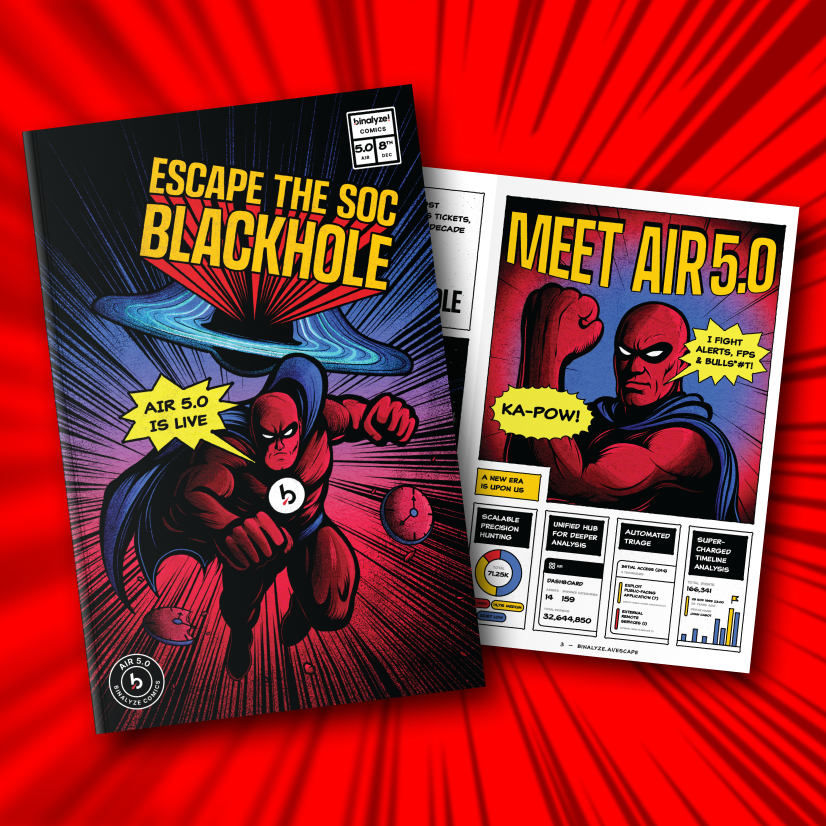

If you’ve ever been in a security operations center (SOC), you know the feeling. It’s like trying to drink from a firehose. Thousands of alerts pour in every day, and your team is overwhelmed, trying to figure out which ones are real fires and which are just false alarms.
The old way of doing security isn’t working anymore. We used to think the answer was to hire more people and buy more tools. But as we’ve learned, you can’t hire your way out of this problem. Attackers are using fast, automated attacks, and our manual defenses just can’t keep up. Our expensive tools often don’t talk to each other, leaving our security team trying to piece together a puzzle with pieces from ten different boxes.
It’s time for a change. We need to move beyond alert fatigue and start operating left of bang—where preparedness and investigation take the lead. This isn’t just about buying new software; it’s about changing how we think about security. It’s built on three key ideas: integration, automation, and collaboration.
What a Next-Gen SOC Really Looks Like
A Next-Gen SOC is smarter, not just bigger. It’s a place where technology does the heavy lifting so that human experts can do what they do best: think critically and investigate.
Integration: Making Your Tools Talk to Each Other
In a traditional SOC, you might have one tool for your network, another for your computers, and a third for your cloud services. When an alert pops up, an analyst has to manually check all three systems to see the full story. This is slow and things get missed.
A Next-Gen SOC connects these tools. It integrates them. When an alert comes in, it automatically pulls information from all your security systems. Your team gets one clear picture of what happened, from the first suspicious email to the strange activity on a server. This breaks down information silos and gives your team the context they need to make good decisions quickly.
With solutions like Binalyze AIR, evidence from across your infrastructure—on-prem, hybrid, or cloud—is instantly collected and correlated, turning alerts into actionable timelines within minutes.
Automation: Letting the Machines Handle the Boring Stuff
Attackers use automation to launch thousands of attacks at once. We need to fight fire with fire. In a Next-Gen SOC, automation handles the simple, repetitive tasks that burn out analysts.
For example, when an alert about a suspicious file comes in, an automated playbook can instantly run it in a sandbox, check its reputation against threat intelligence, and see if it’s appeared elsewhere in your network. If it’s a known bad file, it can be blocked automatically. This frees up your team to focus on the complex, unknown threats that truly require their expertise.
Binalyze’s approach takes this a step further. With the new Fleet AI engine, investigative automation isn’t just reactionary—it’s anticipatory. Instead of waiting for an alert, Fleet AI proactively recommends investigation paths based on patterns across your environment—giving your team an early edge.
Collaboration: Working Smarter, Together
Security is a team sport. A Next-Gen SOC is a collaborative hub. Because all the information is integrated into one place, different teams can work together seamlessly. Your IT operations team, network team, and security team can all look at the same data during an investigation. This shared view ensures everyone is on the same page and can work together to resolve the incident faster.
Speed Matters More Than a Mountain of Alerts
For years, security teams were judged on how many threats they could detect. We filled up dashboards with big, scary numbers of blocked attacks. But here’s the truth: detecting a threat is useless if you can’t resolve it quickly.
Think of it like a smoke detector. A detector that just beeps is helpful, but one that automatically calls the fire department is what actually saves the house. The time between the first beep and the fire being put out is what really matters.
In cybersecurity, this is the “alert-to-resolution” time. The goal of a Next-Gen SOC is to make that time as short as possible. A hacker who is inside your network for 10 minutes can do far less damage than one who is there for 10 days. And if you can investigate before that alert even fires—left of bang—you reduce the chance of impact altogether.
The Secret Sauce: An “Investigation-First” Security Culture
This all leads to the most important shift: moving from an “alert-first” to an “investigation-first” mindset.
The Old Way (Alert-First):
An analyst sees an alert and spends all their time trying to prove if that single alert is real or not. They chase down thousands of these alerts, get exhausted, and often miss the important ones buried in the noise.
The New Way (Investigation-First):
An analyst sees a high-quality, enriched alert. Instead of just looking at the alert, they ask, “What’s the story here?” They can easily see who the user was, what else was happening on their machine, and where the threat came from. They aren’t just chasing alerts; they are investigating incidents.
And increasingly, they’re investigating proactively—before the alert. With tools like Fleet AI, your team can identify abnormal patterns or dormant compromise indicators without waiting for detection tools to trigger.
This investigation-first model is the key to cyber resilience. Resilience isn’t about stopping every single attack—that’s impossible. It’s about being able to take a punch, quickly figure out what happened, and get back up without getting knocked out.
How Binalyze Powers the Next-Gen SOC
To build an investigation-first culture, your team needs the right tools to find answers quickly. This is where solutions like Binalyze come in.
Binalyze AIR is a platform for Investigation and Response Automation that’s built for speed, depth, and scale. Instead of taking hours or days to manually collect evidence from a computer, AIR can automatically gather over 350 types of forensic data across your fleet in under 10 minutes. With Fleet AI, that process becomes smarter—guiding investigations with context-aware recommendations and minimizing time to root cause.
Binalyze doesn’t just help you investigate faster—it helps you investigate smarter and earlier, shifting your SOC culture from reactive to proactive.
By building a SOC focused on providing the full story, we empower our teams to become true investigators, not just alert-closers. They can connect the dots, understand the bigger picture, and protect the organization from threats that actually matter.